FirstService Corporation, one of North America's largest property service providers, released its Q3 2026 earnings on October 25. The numbers tell a clear story about how property care is changing in a difficult economic environment. Revenue hit $1.53 billion, up 6% from the same period last year. However, the growth was not uniform. It came primarily from restoration and fire protection services, not from routine home maintenance. This shift matters for you if you own a home or manage property in Nova Scotia. It signals that weather-driven, urgent repairs are now the primary driver of property service spending. Meanwhile, discretionary work like cosmetic landscaping or non-urgent upgrades is seeing softer demand. For Nova Scotia homeowners, this is a cue to look at your maintenance calendar differently. The money is going toward preventing damage, not just fixing it after the fact.
Key points
- FirstService reported $1.53 billion in Q3 revenue, with growth driven by restoration and fire protection rather than discretionary home services.
- Restoration revenue grew 10% year-over-year, highlighting the financial impact of weather events on property maintenance.
- Property management margins expanded as the company focused on existing communities and larger, complex properties.
- Soft demand in discretionary home services suggests homeowners are deferring non-urgent repairs, making transparent pricing more critical.
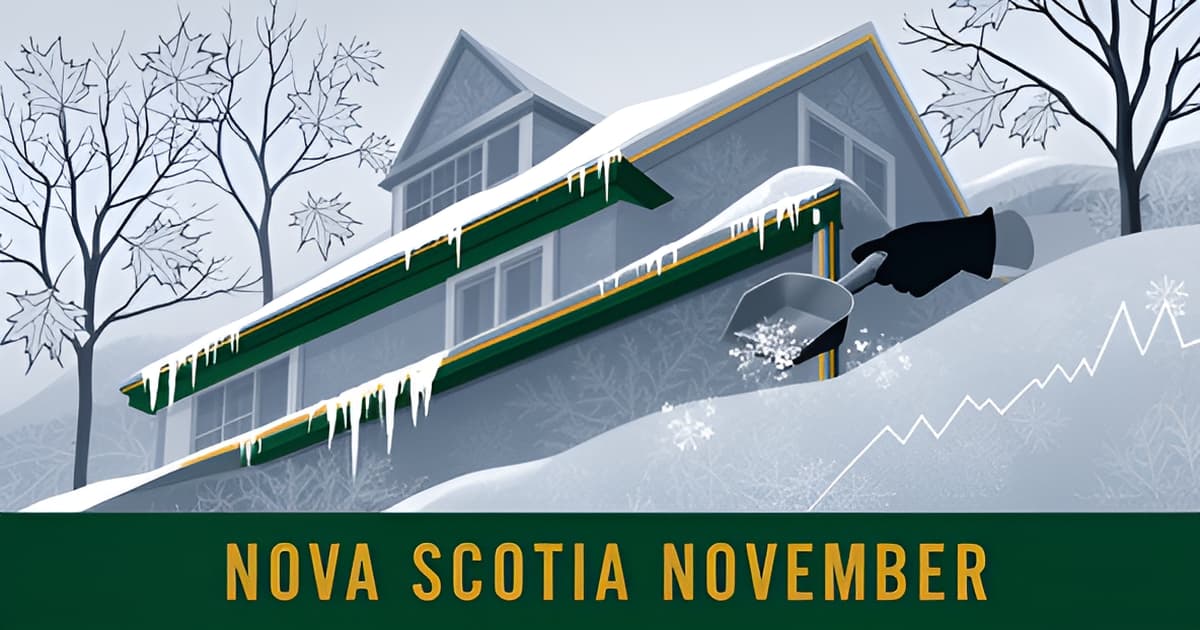
- Nova Scotia's freeze-thaw cycles and ice dam risks make gutter cleaning and snow management essential preventative measures for November.
FirstService's restoration brands, including Paul Davis and First Onsite, saw revenue grow by 10% in the quarter. This outpaced the company's overall growth rate. Management attributed this to broad-based activity, including work in Canada and storm-hit areas in the U.S. This is not a surprise to anyone who has lived through a Nova Scotia winter. Weather events create non-discretionary demand. You do not choose to fix an ice dam. You do not choose to repair water damage from a burst pipe. These are urgent, must-do tasks. The earnings report confirms that this is where the industry's money is moving. In our region, the equivalents are freeze-thaw damage, salt-driven concrete spalling, and the four-week maple leaf drop that buries gutters. These are not optional line items. They are preventative measures that protect your asset. The data suggests that smart property owners are investing in prevention before the damage becomes a restoration job.
FirstService Residential, the property management arm, reported revenue of $633 million, up 5%. More importantly, margins expanded by 30 basis points to 11.3%. The company cited labor-cost optimization and a focus on larger, complex properties as key drivers. New development activity has slowed, meaning the company is winning management contracts from existing communities. This is a direct signal to property managers in Halifax, Dartmouth, and Bedford. Existing communities are looking for efficiency. They are consolidating vendors. If you are a strata board or a property manager, this is your moment to review your service contracts. The trend is moving away from juggling multiple seasonal contractors. It is moving toward single-accountable brands that can handle snow, grounds, and cleaning under one roof. This reduces administrative overhead and creates a single point of contact for issues. The margin expansion at FirstService shows that this model works for large operators. It works for local ones, too, when you have a vetted network of partners and a clear scheduling system.
The earnings call noted weaker demand across home services and roofing. This is a sign of consumer caution. Homeowners are deferring discretionary work. They are holding off on new landscaping projects or non-urgent repairs. This does not mean you should skip maintenance. It means you should be strategic about it. When budgets are tight, transparency becomes a competitive lever. You want to know the exact cost before you commit. This is why published price ranges and firm written quotes are so important. You should not have to guess what a gutter cleaning or a pressure wash will cost. You should not have to navigate a maze of hidden fees. The industry is moving toward clarity because customers are demanding it. If you are planning your winter maintenance budget, look for providers who offer flat monthly plans for recurring services like snow removal or mowing. This gives you budget certainty. You know the cost upfront. There are no surprise invoices when the weather turns. This is the same model that drove margin expansion for FirstService. Predictable, contracted revenue is resilient in a tough economy.
With the restoration data in hand, the practical takeaway for Nova Scotia homeowners is clear. November is the critical month for ice dam prevention. Ice dams form when meltwater from the roof refreezes at the eaves. This pushes water under shingles and into your home. The fix is cheap if you do it now. It is expensive if you wait until the damage is done. The solution is simple. Clean your gutters and ensure your downspouts are working. This prevents water from backing up under the roof. It is the lowest-cost insurance you can buy against winter water damage. FirstService's growth in restoration is a reminder of what happens when this prevention step is skipped. In Nova Scotia, the freeze-thaw cycles are intense. The salt on the roads drives spalling in concrete. The fog and damp grow black algae on north-facing siding. These are local realities that national data points do not capture. But the principle is the same. Prevention is cheaper than repair. If you have not cleaned your gutters this year, do it before the first hard freeze. It is a two-hour job that can save you thousands in winter repairs.
FirstService's Q3 results are a macro signal, but the local implications are direct. The industry is shifting toward weather-driven repairs and efficient property management. Discretionary spending is slowing. For you, this means two things. First, prioritize preventative maintenance like gutter cleaning and snow management. Second, consider consolidating your service providers to reduce administrative burden and increase budget transparency. The data shows that this approach is not just smart for large companies. It is smart for individual homeowners and property managers, too. The season is turning. Your maintenance calendar should turn with it.